
Choosing a beautiful, simple Мультивалютный кошелек: desktop, mobile, and exchange picks
:fill(white):max_bytes(150000):strip_icc()/Exodus-0c4aa171f9fd4b72b9bef248c7036f8d.jpg)
Okay, so check this out—if you care about a wallet that looks good and doesn’t make your head spin, you’re not alone. Wow! Most people I talk to want three things: clean design, easy backups, and support for many coins. My instinct said to look at both desktop and mobile options, and also how they link to exchanges, because that flow matters more than people think. Initially I thought a single app could handle everything perfectly, but then I ran into tradeoffs around custody and convenience, and had to rethink things.
Here’s the thing. Desktop wallets give you space and clarity. Really? Yes. They usually show portfolio charts side-by-side, let you manage multiple accounts, and make exporting keys easier. But they can be a little intimidating for casual users. Hmm… I remember showing my mom a desktop wallet UI and she asked me to turn the computer off—true story. On the flip side, mobile wallets excel at QR ease and push notifications, and they make day-to-day payments painless.
Most desktop wallets connect to exchanges or have built-in exchange features. That can be handy. Whoa! But it also raises questions about fees and privacy. On one hand a built-in swap saves you time, though actually—wait—if you trade often those invisible spread costs add up. So I started testing swap flows on several wallets, watching how prices compared to major centralized exchanges and DEXes. Some wallets were competitive, others were not. My notes were messy, somethin’ like sticky notes all over my desk.
Desktop wallet pros and cons
Desktop wallets tend to feel solid and feature-rich. Short answer: they’re for power users and people who like control. They give you native key management and often more coin support than lightweight mobile-only apps. That said, setup can be more fiddly. You need to back up seed phrases and understand where files live on your machine. I’ll be honest—this part bugs me when a wallet pretends backups are automatic and hides the seed words behind ten menus. Seriously?
On security: desktop wallets can be very secure when paired with a hardware wallet, or when used on a dedicated machine. However, most people use them on their daily computer, and that invites malware risks. Something felt off about wallets that advertise “bank-grade” security while still encouraging clipboard copy-paste for addresses. My rule of thumb became: treat a desktop wallet as a control center, but use hardware keys or a secure mobile app for day-to-day spending.
Functionally, desktop apps make long-form activities easier—batch transactions, manual coin consolidation, CSV exports for taxes, and more. Long sentences help explain the complexity: you can run node integrations, testnet wallets, and custom token management, which demand a bigger screen and more patience, though for most users that’s overkill and a well-designed mobile app wins.
Mobile wallet advantages
Mobile wallets are frictionless. They fit in your pocket. Period. Push notifications, NFC payments, QR scanning—those tiny conveniences add up. Really? You bet. I used a mobile wallet to pay a street vendor once, and it felt like the future. Yet mobile apps vary wildly in how many assets they support, and whether they integrate swaps or connect to exchanges. Some mobile wallets deliberately limit functionality to stay simple, which is a design choice I respect.
On the downside, phones get lost and stolen. Backup practices matter. I saw a friend lock themselves out because they trusted cloud backups that were tied to a phone account, and when they changed providers the wallet vanished. Initially I thought cloud backups were the best user experience, but then realized local encrypted backups plus a written seed is still the most reliable plan. On the other hand, biometric unlock does make the experience smooth, and very very tempting to skip the seed-saving step—don’t skip it.
Exchanges vs in-wallet swaps
When wallets offer built-in swaps, it’s delightful. You don’t leave the app. You don’t wrestle with deposit addresses. But there are tradeoffs. Fees can be higher, and some wallets route through partner services that take spreads. So check the quote. Hmm… I started comparing a dozen swap quotes side-by-side (boring, yes) and found variance that surprised me. On one occasion the wallet’s in-app swap cost twice as much as doing the trade on a major exchange. Ouch.
Centralized exchanges still win for deep liquidity and complex order types. Yet they require KYC and custody. Some folks prefer a hybrid approach: keep long-term holdings in a non-custodial desktop or hardware-backed wallet, and use an exchange or an in-wallet swap for occasional trades. On one hand that keeps control, though actually the more hops you do the more you risk mistakes, so balance matters.
How I pick a Мультивалютный кошелек
Practical checklist. Short list first. Does it support the coins you care about? Does it have simple backup guidance? Is the UX clean without hiding critical warnings? Okay, deeper stuff: how does it implement swaps, what are the fees, and does it allow hardware wallets? For me, the ideal combo is a beautiful, easy desktop app that syncs sensibly with a mobile companion and ties into exchange flow without being a middleman for custody.
One wallet I’ve referenced in testing and recommend checking out is available here. It strikes a balance between design and features, and the UX makes onboarding less painful. I’m biased, but that visual polish matters when you use a tool daily.
Tips for new users: write down seeds on paper. Use a small airtight safe if you can. Test small transactions first. If a wallet offers a “watch-only” mode, use it to familiarize yourself. Also, keep a separate device or profile for crypto if you’re serious—sounds extreme, but it reduces risk.
FAQ
What’s the safest setup?
Use a hardware wallet for custody, paired with a trusted desktop app for management. Keep an offline seed copy and a separate, less-connected device for large moves. For day-to-day, a mobile wallet is fine, just keep backups.
Are built-in swaps trustworthy?
They are convenient and generally okay for small trades, but compare quotes first. For large trades, check liquidity on an exchange or DEX to avoid hidden spreads.
Can I use one wallet across desktop and mobile?
Yes. Many wallets sync portfolios across devices (encrypted), but always verify the backup and recovery flow before relying on cross-device sync. I once had to re-sync manually and it was a headache—lesson learned.
- Published in Uncategorized
Expert Advisors and Real-World Automated Trading: What Works and What Fails

Whoa, this is kind of wild. I started using automated strategies years ago and learned the hard way. My gut reaction was excitement, then skepticism when a bot blew an account. Seriously, yeah—there were logs, overfitting, and hidden assumptions nobody mentioned. Initially I thought automated trading was a silver bullet, but then I realized that robust design, realistic backtests, and properly sized risk limits are what separate durable EAs from the ones that vanish overnight.
Hmm, somethin’ felt off. Most retail traders copy code or buy EAs without understanding their assumptions. They ignore data snooping, market regime shifts, and poor parameter choices. On one hand people want convenience and turnkey solutions, though actually the subtle execution details, like slippage under stress and the interaction of order types with broker matching engines, create most of the real-world failure modes. So I built workflows that force hypothesis testing, true out-of-sample validation, walk-forward frameworks, and conservative position sizing so that the strategy survives multiple market regimes rather than just scoring on a neat-looking equity curve.
Wow! That’s useful. Here’s the thing, automated trading isn’t just about logic; it’s also about infrastructure and latency. If your broker has slow fills or your VPS is flaky, signals turn into losses. My instinct said monitor execution and set fallbacks, since live conditions diverge. Actually, wait—let me rephrase that: while backtests are instructive, you need real-time monitoring, robust slippage modeling, and alarms so you catch regime shifts before losses compound and ruin a track record.
Really, is that true? Example: a momentum EA did fine until the Fed changed guidance and volatility spiked. I had a version that looked bulletproof in-sample yet failed miserably during a liquidity event. The failed version lacked stops tied to market depth, assumed constant spreads, and ignored broker-specific order execution nuances that only show up when several counterparties withdraw liquidity simultaneously. So the better approach was to code adaptive spread models, constrain leverage dynamically according to realized volatility, require multi-market confirmation before increasing trade size, and schedule periodic forced revalidation so you don’t drift into fragility.
Okay, so check this out—. If you’re getting started, choose a platform with good tools and an active community. Personally, I’m biased toward platforms that support custom indicators and make strategy testing straightforward. For example, the MetaTrader ecosystem still has many scripts and makes quick prototyping easy. You can download a client, test EAs extensively, simulate varying spreads and latency, and build escalation logic so that one very very bad night doesn’t blow up your account.
Tools and a practical next step
I’m not 100% sure, but… Try a demo account with a simple trend EA first. Then add detailed logging, risk caps, and a recovery plan to avoid nasty surprises. For hands-on traders in the US, regulatory differences, account types, and broker counterparty behavior all matter (oh, and by the way, taxes and reporting differ), so always paper-trade live broker setups to measure fills, slippage, and overnight risk before risking capital for real. If you want a commonly used client that balances usability with extensibility, try metatrader 5 for prototyping EAs, but cross-check fills across brokers and run multi-timeframe validation before scaling up.
FAQ
Really want quick answers?
Q: What’s the single most important thing to test? A: Robustness over peak returns; check out-of-sample and stress tests first. Q: Should I trust vendor backtests or ask for walk-forward and live-sample records? A: No—use vendor tests as a starting point, but insist on out-of-sample and demo-live comparisons, independent code review when possible, and clear rules for stops and position sizing to avoid hidden tail risks that show up only under stress.
- Published in Uncategorized
Why event trading feels like both a sport and a science

Whoa, seriously, this is wild. I got pulled into event trading through a late-night sports bet. It felt like a market, not just rooting for a team. The mechanics are simple but the strategies hide in plain sight. Initially I thought this was hobby-grade gambling, but after tracking odds, liquidity, and information flows across multiple platforms I realized there was a rigorous, almost scientific process behind successful trades.
Hmm, somethin’ felt off… Odds moved before news broke on more than one occasion. That was my gut speaking, and then I chased the pattern. On the one hand it’s exciting, fast-paced, and borderline addictive. On the other hand, liquidity dries up for niche markets, slippage eats margins, and cognitive biases masquerade as insight so it’s easy to confuse noise for predictive signal if you don’t measure carefully.
Seriously, I was hooked quickly. Sports predictions compress months of information into single probabilities. You read lineups, weather, referee tendencies, and even social chatter. Then you translate all that into a price and a position. My instinct said ‘bet the underdog with late line movement’, but analytics showed that market makers had already arbitraged most of that value away, which is a useful lesson about timing and model robustness.
Here’s the thing. Event traders need reproducible playbooks, not just intuitive hunches. Start with liquidity checks, depth curves, and a thesis about information flow. Backtest strategies against historical markets and simulate realistic slippage assumptions. Actually, wait—let me rephrase that: backtests must incorporate execution costs, fees, and varying time horizons, because theoretical edge evaporates when you can’t enter or exit at quoted prices during real market stress.
Whoa, that escalated fast. Sports markets are brutally educational; they teach you probability theory fast. You learn to quantify uncertainty, and then to price that uncertainty into bets. But the ethical and legal lines are fuzzy in places. Regulators are catching up, and platforms must balance free expression, market integrity, and the practicalities of KYC/AML, which complicates product design and user experience especially for casual sports fans who simply want to predict the big game.
Getting started — a practical note
I’m biased, but Polymarket-style user interfaces lower friction and make entry easier for curious newcomers. If you want to try, visit polymarket for a familiar entry point and quick markets. The login flow feels modern, though sometimes clunky on mobile. On one hand ease of use brings liquidity and better prices, though actually the tradeoff is that you can attract less sophisticated money, which raises volatility and creates moments where price discovery breaks down under stress.
Okay, so check this out—if you treat event trading like a tiny research project, it becomes less about vibes and more about repeatability. Initially I thought speed was everything, but then I learned patience and sizing beat heroics most days. On one hand smaller bets preserve longevity; on the other you might miss big moves. That tension is what keeps me coming back.
FAQ
How do I size bets as a beginner?
Start tiny, quantify your edge, and risk only a small percentage of your bankroll per trade.
Are sports prediction markets legal?
It depends on jurisdiction; some US states restrict real-money prediction markets, so check local rules and platform terms.
- Published in Uncategorized
Test Post for WordPress
This is a sample post created to test the basic formatting features of the WordPress CMS.
Subheading Level 2
You can use bold text, italic text, and combine both styles.
- Bullet list item #1
- Item with bold emphasis
- And a link: official WordPress site
- Step one
- Step two
- Step three
This content is only for demonstration purposes. Feel free to edit or delete it.
- Published in Uncategorized
Why an Untraceable Crypto and a Secure XMR Wallet Still Matter in 2026

Whoa!
I’m sitting at a diner in Denver, coffee getting cold, thinking about privacy again. My gut said somethin’ wasn’t right with how most wallets treat metadata. Initially I thought privacy coins were niche, but then reality hit—surveillance tech got cheaper and more pervasive. On one hand people want convenience; on the other, they want to stay private though actually those goals conflict a lot.
Really?
Here’s the thing: privacy isn’t about hiding illegal behavior. It’s about financial dignity and minimizing exposure. I’ll be honest—this part bugs me because too many gloss over the tradeoffs. For users who value plausible deniability and minimal trace, Monero still stands out, and there are practical wallet choices to match.
Hmm…
A quick primer: Monero (XMR) uses ring signatures, stealth addresses, and RingCT to obfuscate sender, receiver, and amounts, which makes chain analysis much harder. My instinct said those features were theoretical once, but they’ve matured—serious cryptanalysis hasn’t unraveled Monero’s core properties. Actually, wait—let me rephrase that: no system is perfect, and there are always operational mistakes people make that leak info.
Whoa!
So what makes a secure XMR wallet? First, deterministic seed handling that never exposes your keys to remote servers. Second, wallet software that enforces local node or trusted remote node options without nagging ads. Third, UX that doesn’t push users to break their own privacy by default (like address reuse prompts). These are simple things, but very very important in practice.
Really?
Running your own node is ideal because it removes a single point of metadata leakage when you query balances or broadcast transactions. For many US-based users the barrier is hardware and bandwidth, not skill—so hardware options and lightweight nodes help. I remember setting up a node in a cramped apartment; it worked, but it was fiddly and taught me care. (oh, and by the way…) you can rely on trusted community nodes if you understand the tradeoffs.
Hmm…
Let me walk through typical user mistakes—these are real and I’ve seen them. People copy-paste addresses into emails. They use the same integrated address for shopping across platforms. They expose wallet files on cloud backups without encryption. Initially I thought training users would fix this, but then I realized design matters more than user willpower: the wallet should make the safe choice the easy choice.
Whoa!
Okay, so check this out—wallet options vary from mobile light wallets to full-desktop clients to hardware+desktop combos. If you want the balance of convenience and privacy, consider a non-custodial wallet that supports local node connect or vetted remote node lists. For the particularly cautious, use air-gapped signing with a watch-only device watching balances on a different machine. I’m biased, but that workflow reduces attack surface dramatically.
Really?
There’s also the question of recovery and backups. Seed phrases are great until someone takes a photo of them. Use metal backups for long-term storage; paper burns and degrades. I’ve lost a backup once—never again—so redundancy matters. On the flip side, too many redundant copies increase risk, so plan carefully.
Hmm…
What about mobile wallets—are they ever private enough for XMR? Short answer: sometimes. Modern mobile wallets are better at sandboxing keys than older ones and many now support native Monero features, but mobile OS telemetry is a wild card. On one hand they offer convenience; on the other, they can silently leak. My recommendation: use mobile for low-value day-to-day stuff and keep your main stash in a hardware-backed wallet.
Whoa!
If you’re shopping for a wallet, look for open-source code, reproducible builds, and an active community that audits changes. Pay attention to release notes and how developers respond to vulnerability reports. Something felt off about vendors that hide their code or rely solely on obfuscated binaries. Community trust is not a silver bullet, but it’s a strong signal.
Really?
For folks who want a practical next step, try a reputable desktop wallet with a clear guide for connecting to a private node or using Tor for network privacy. Also, think about operational security—don’t mix your privacy-focused funds with traceable exchange withdrawals unless you’re comfortable with linking. Initially I thought exchanges could be compartmentalized easily, but linking happens fast if you reuse addresses or connectors.
Hmm…
One useful resource I return to is community-maintained wallets and services that focus on Monero usability while preserving privacy guarantees; sometimes that includes lightweight wallets that integrate privacy-first defaults. If you want a place to start exploring options, check tooling and wallets like the ones linked from trusted community hubs (I often point people to straightforward, single-link resources). I’m not endorsing any single commercial product here, I’m sharing a path—use your judgment.
Whoa!
Practical checklist for a secure XMR wallet
Here’s a short do-list for readers who want to harden their setup: run or trust a vetted node, use air-gapped signing for large sums, secure backups (metal preferred), avoid address reuse, prefer open-source wallets. Seriously? Yes—these actions reduce many common leaks. If you want fewer hurdles at the start, try a wallet recommended by the Monero community after verifying its build and release processes at the project’s channels.
Initially I thought linking directly to a single resource would be too prescriptive, but linking a single, well-maintained resource helps cut noise; for those wanting to download a straightforward wallet and learn more, visit http://monero-wallet.at/ and follow privacy-first guidance there. Actually, wait—that site is one of many useful entry points, but it’s clear and practical for beginners and power users alike. On one hand you get a usable interface; on the other you should still verify builds and community feedback.
FAQ
Is Monero truly untraceable?
Not absolutely—no system is perfect and operational mistakes can deanonymize users, but Monero’s cryptography is designed to make typical chain-analysis techniques ineffective at linking transactions. Hmm… privacy is a property of protocol plus behavior, so your actions matter as much as the tech.
Can I use Monero on mobile safely?
Yes for low-value transactions if you use a privacy-focused mobile wallet and layer network protections like Tor; for large sums use hardware wallets and air-gapped signing. I’m not 100% sure about every mobile OS update, so check for build audits and community reviews often.
- Published in Uncategorized
Why a Solana DeFi Wallet Extension Actually Matters (And How to Pick One)
Whoa!
I got hooked on Solana wallets for the same reason a lot of folks do: speed and cheap fees, and that sweet feeling when a swap completes instantly.
Most browser wallets try to be everything to everyone, but some nail the basics—security, UX, and the right integrations—better than others.
My instinct said, from the jump, that extensions would stay relevant, though I was skeptical about how secure they’d be against phishing and sloppy user habits.
After using a few for months, testing dApps, and losing sleep over tiny mistakes, I developed a clearer sense of what actually matters when you use DeFi in your browser.
Seriously?
Yes—security is both simple and maddeningly messy: seed phrases, permissions, and sites that ask for unnecessary access.
You can do a lot right and still make one tiny mistake that costs you real money.
On one hand, extensions make on-chain interactions fast and convenient; on the other, they expand your attack surface if you accept prompts without thinking.
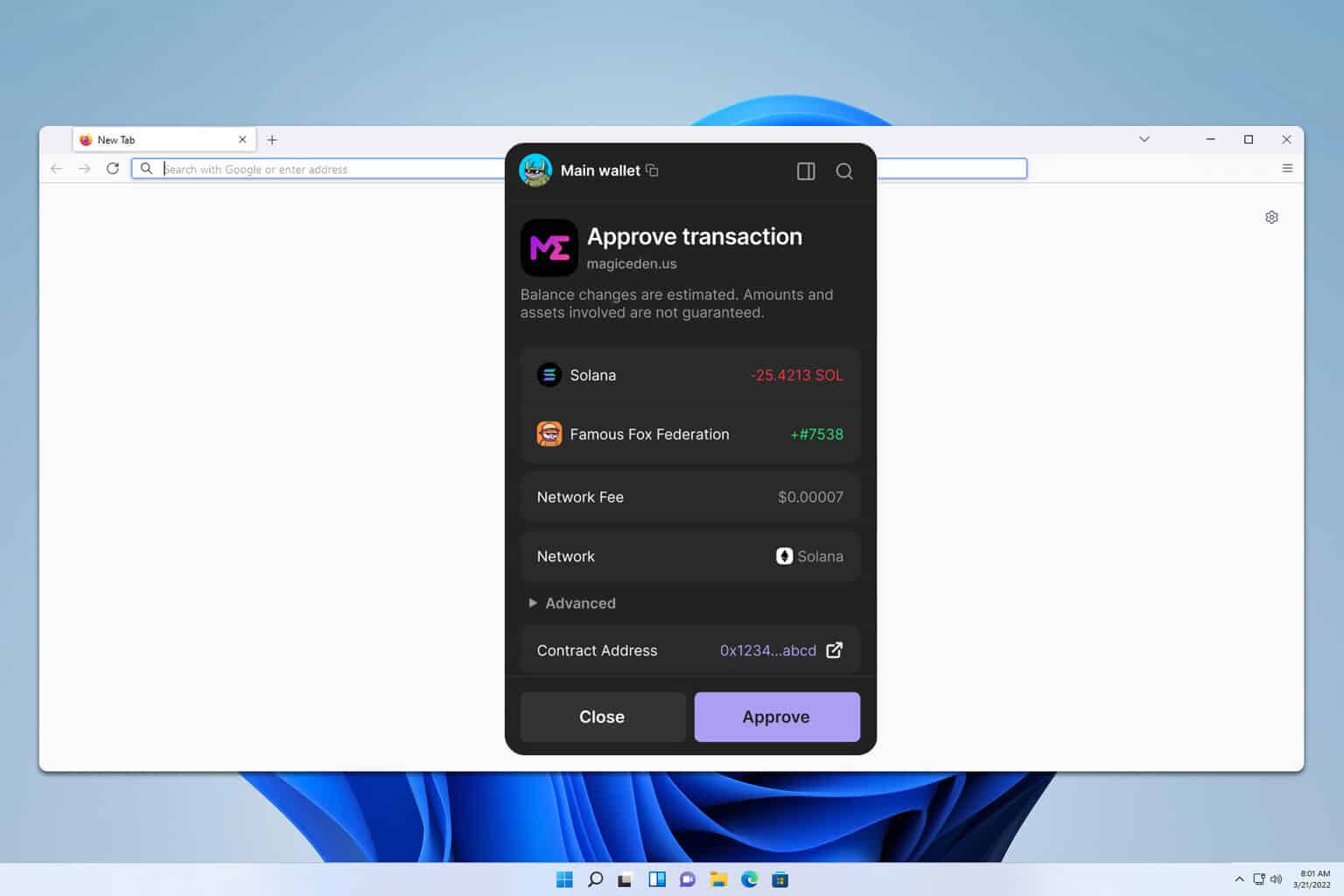
So, okay—there’s a trade-off here that surprises newcomers, and it’s worth thinking through before you click “connect.”
Here’s the thing.
Good extensions guide you and limit footguns, while bad ones let you trip over them.
Initially I thought a prettier UI would be the deciding factor, but the reality was different: permission granularity and transaction previews mattered way more.
Actually, wait—let me rephrase that: beauty helps adoption, but clarity and guardrails keep your assets safe, which is the only thing that truly counts when markets move fast.
That shift in priorities is what changed how I evaluated each wallet.
Hmm…
User experience also includes onboarding—seed phrase flows, account recovery hints, and how they educate you about phishing.
A wallet that treats education as an afterthought will frustrate users, and frankly, that’s on the product team.
I prefer interfaces that use plain language (no crypto jargon), and that ask for permission in context instead of throwing modal after modal at you.
Oh, and by the way, I still use somethin’ simple for everyday swaps and a hardware combo for big moves; balance matters.
Where downloads and trust intersect
Okay, so check this out—if you want a convenient, reliable place to get a reputable Solana extension, the official storefronts matter, but so does the source.
For convenience and safety, many users go straight to the official site or verified stores, and the phantom wallet download extension is a common route people recommend because it points to the known distribution.
Do not grab random extensions from sketchy links in social media or DMs—seriously, don’t.
A good download source plus a quick sanity check (publisher name, reviews, permissions) will stop most scams before they begin.
Trust isn’t automatic; it’s a small checklist you do every time.
I’ll be honest—I’m biased toward wallets that integrate well with the Solana ecosystem (Serum, Raydium, Jupiter, etc.).
That convenience is why extensions remain popular: you can hop between dApps without copying addresses or signing raw transactions in a terminal.
But convenience without clarity is how mistakes happen; I’ve seen people approve contract interactions that were far outside their expectations.
So I look for clear transaction descriptions and the ability to edit gas or fee limits when appropriate, even though Solana’s fees are low.
Those controls give you breathing room when the network or your dApp behaves oddly.
Something felt off about some “all-in-one” wallets I tried—they tried to manage everything for you, and in doing so obscured critical choices.
A wallet that hides the details is a wallet that makes it easier to be exploited, even unintentionally.
On the flip side, hyper-technical wallets can overwhelm new users, so there’s a sweet spot: guided defaults with visible, reversible actions.
I like when a wallet offers a “safe mode” or similar quick setting—little UX choices like that reduce regret.
People underestimate regret; they call it FOMO, panic, or haste, but it’s mostly poor product cues.
For folks who want extra assurance, use an extension as a frontend and back it with cold storage for savings.
A hardware ledger for large balances, and an extension for everyday interactions, is a practical pattern I follow.
This split keeps your active funds accessible while the bulk remains offline, and that balance works well for traders and collectors alike.
And yeah, for collectors who buy NFTs on Solana, quick extension approvals can be a lifesaver—if used carefully.
Be mindful: NFTs have extra metadata risk, so read prompts closely.
My quick checklist when I test a new Solana extension:
– Source and verification (publisher, official site).
– Permission granularity (what can it actually do?).
– Transaction clarity (can I see what I’m signing?).
– Recovery and seed phrase guidance (are they explicit and safe?).
– Community and support (active team, clear changelogs).
It’s not exhaustive, but it catches most issues before they bite you.
FAQ
Is a browser extension safe for serious DeFi use?
Extensions are safe when used correctly: verify the source, keep software updated, use hardware for large sums, and never share your seed phrase.
They are great for active trading and dApp interactions, but for long-term storage pair them with cold wallets.
How do I avoid phishing and fake extensions?
Only install from verified publishers or the official website, check permissions before approving, and if a site asks for unusual access, pause—double-check URLs and community channels.
When in doubt, don’t click.
- Published in Uncategorized
MetaTrader 5, Expert Advisors, and Getting Set Up: A Practical Guide for Forex Traders
MetaTrader 5 (MT5) is one of the most commonly used trading platforms in forex and CFD markets. It combines live quotes, advanced charting, automated trading, and built-in tools for optimization and backtesting. For traders who want a single environment to test strategies, run Expert Advisors (EAs), and manage orders across multiple instruments, MT5 is a strong choice.
Why consider MT5 over alternatives? Short answer: breadth and flexibility. MT5 supports multi-asset trading, has a more modern architecture than MT4, and includes a richer set of built-in indicators and a native Strategy Tester that handles multi-threaded optimization. Longer answer: the platform also supports the MQL5 language, which was designed with object-oriented features and more advanced libraries for quant-style development.
Downloading and installing MT5
Getting MT5 is straightforward. Brokers usually provide installer links, and a direct installer can also be found at https://sites.google.com/download-macos-windows.com/metatrader-5-download/. Pick the installer that matches your operating system — Windows, macOS, or mobile — and follow the prompts. After installation, create or import a demo account first; that’s the safe way to test connectivity, EAs, and chart templates without risking capital.
Windows users should check system permissions (antivirus and firewall settings sometimes block the terminal). macOS users often run MT5 via native builds or wrappers; verify the broker’s macOS instructions. Mobile apps for iOS and Android provide decent monitoring and basic order entry, but they’re not substitutes for full desktop functionality when running EAs or doing deep-testing.
Expert Advisors: what they are and how they work
An Expert Advisor is an automated trading script written in MQL5 that can place orders, manage positions, and react to market events without manual intervention. EAs range from simple indicators-based scripts to complex systems that use machine learning models or portfolio-level logic. The Strategy Tester in MT5 lets traders backtest EAs on historical data and apply optimization routines to tune parameters.
Key considerations when using EAs:
- Data quality matters. Backtest results are only as good as the tick or minute data used.
- Overfitting is common. Optimize conservatively and validate on out-of-sample periods.
- Slippage and execution delays in live trading can materially change outcomes versus backtests.
- Understand the EA’s logic before running it live — a black box can blow accounts quickly.
Traders should use forward testing on demo accounts and small live sizes first. Also consider running EAs on a reliable VPS to keep the terminal online 24/7, because connection drops or laptop sleep modes will interrupt automated strategies.
Strategy testing and optimization
MT5’s Strategy Tester supports multi-threaded optimization using genetic algorithms and other methods. This makes it efficient when searching large parameter spaces. However, that efficiency can tempt over-optimization. Use a testing workflow like:
- Develop hypothesis and baseline parameters.
- Backtest on multiple timeframes and market regimes.
- Optimize conservatively and review equity curves, drawdowns, and trade distribution.
- Validate on out-of-sample data and walk-forward segments.
- Deploy to demo, then to small live size with live connection monitoring.
Also take advantage of MT5’s built-in report features to analyze trade metrics: profit factor, expected payoff, max drawdown, and recovery factor. Those tell a more complete story than raw win rates.
Risk management and operational best practices
Automating trades doesn’t remove the need for risk controls. Set per-trade limits, daily loss limits, and aggregate exposure checks. Many traders use the following practical rules:
- Risk a fixed percentage of account per trade (e.g., 0.5–2%).
- Use stop-loss and position-sizing logic embedded in the EA.
- Monitor correlation across instruments to avoid hidden concentration.
- Keep logs and alerts for unusual behavior (multiple rejections, order re-quotes).
Connectivity is an operational risk. If the broker’s server is unstable or the internet link drops, orders may not execute. A small VPS close to the broker’s data center reduces latency and improves uptime. For US-based traders or those following US market hours, consider VPS locations on the east coast to reduce round-trip times to major liquidity venues.
Choosing, adapting, or building Expert Advisors
There are three common routes: buy a commercial EA, adapt an open-source EA, or build one from scratch. Each has trade-offs. Commercial EAs may be easy to deploy but can be overhyped. Open-source EAs offer transparency but might require technical tweaks. Custom EAs give the most control but need development time.
When evaluating an EA, look for these red flags: unverifiable backtest claims, overly granular parameter sets (sign of curve-fitting), and lack of clear edge or market rationale. Prefer EAs with reproducible backtests on tick data and live/demo track records that can be audited.
Developers who use MQL5 benefit from an ecosystem of libraries and community resources. If building, start simple: implement signal generation, risk module, and position
- Published in Uncategorized
Test Post for WordPress
This is a sample post created to test the basic formatting features of the WordPress CMS.
Subheading Level 2
You can use bold text, italic text, and combine both styles.
- Bullet list item #1
- Item with bold emphasis
- And a link: official WordPress site
- Step one
- Step two
- Step three
This content is only for demonstration purposes. Feel free to edit or delete it.
- Published in Uncategorized
Test Post for WordPress
This is a sample post created to test the basic formatting features of the WordPress CMS.
Subheading Level 2
You can use bold text, italic text, and combine both styles.
- Bullet list item #1
- Item with bold emphasis
- And a link: official WordPress site
- Step one
- Step two
- Step three
This content is only for demonstration purposes. Feel free to edit or delete it.
- Published in Uncategorized
Test Post for WordPress
This is a sample post created to test the basic formatting features of the WordPress CMS.
Subheading Level 2
You can use bold text, italic text, and combine both styles.
- Bullet list item #1
- Item with bold emphasis
- And a link: official WordPress site
- Step one
- Step two
- Step three
This content is only for demonstration purposes. Feel free to edit or delete it.
- Published in Uncategorized
